 |
| Comic courtesy Following Hadrian Facebook Page |
Today, July 18th, is the anniversary of the ignition of the Great Fire in Rome. This famous fire was begun in the night between July 18 and July 19 in 64 CE (AD for non-nerdy classicists) and burned for 5 days. This fire is famous to us because of the legend that Emperor Nero fiddled on his roof during the burning of the fire. There is also the fact that the Christians were later persecuted and blamed for starting the fire. Both of these are disputed facts.
There is a bunch about this that is not exactly true. Did Nero really go on his roof and watch the city burn? The historian Cassius Dio tells us that Nero went to his rooftop and
assuming the lyre-layers garb, he sang the "Capture of Troy" (Cassius Dio, Roman History XVII)
Seutonius, in the Lives of the Caesars tells us that Nero
Viewing the conflagration from the tower of Maecenas and exulting, as he said, in "the beauty of the flames," he sang the whole of the "Sack of Ilium"in his regular stage costume. (Suetonis, Life of Nero 68)
 | |
| Graffiti image of Nero (Courtesy Wikipedia) |
But Nero wasn't the only Roman to become a fire watcher. These same sources tell us that all Romans were either watching the fire, helping their neighbors (and then finding out their homes were burning) or looting and doing other typically not good things. Nero wasn't even the only one to profit from the aftermath of the fire. Nero did acquire much of the burned area to build his Golden Palace.
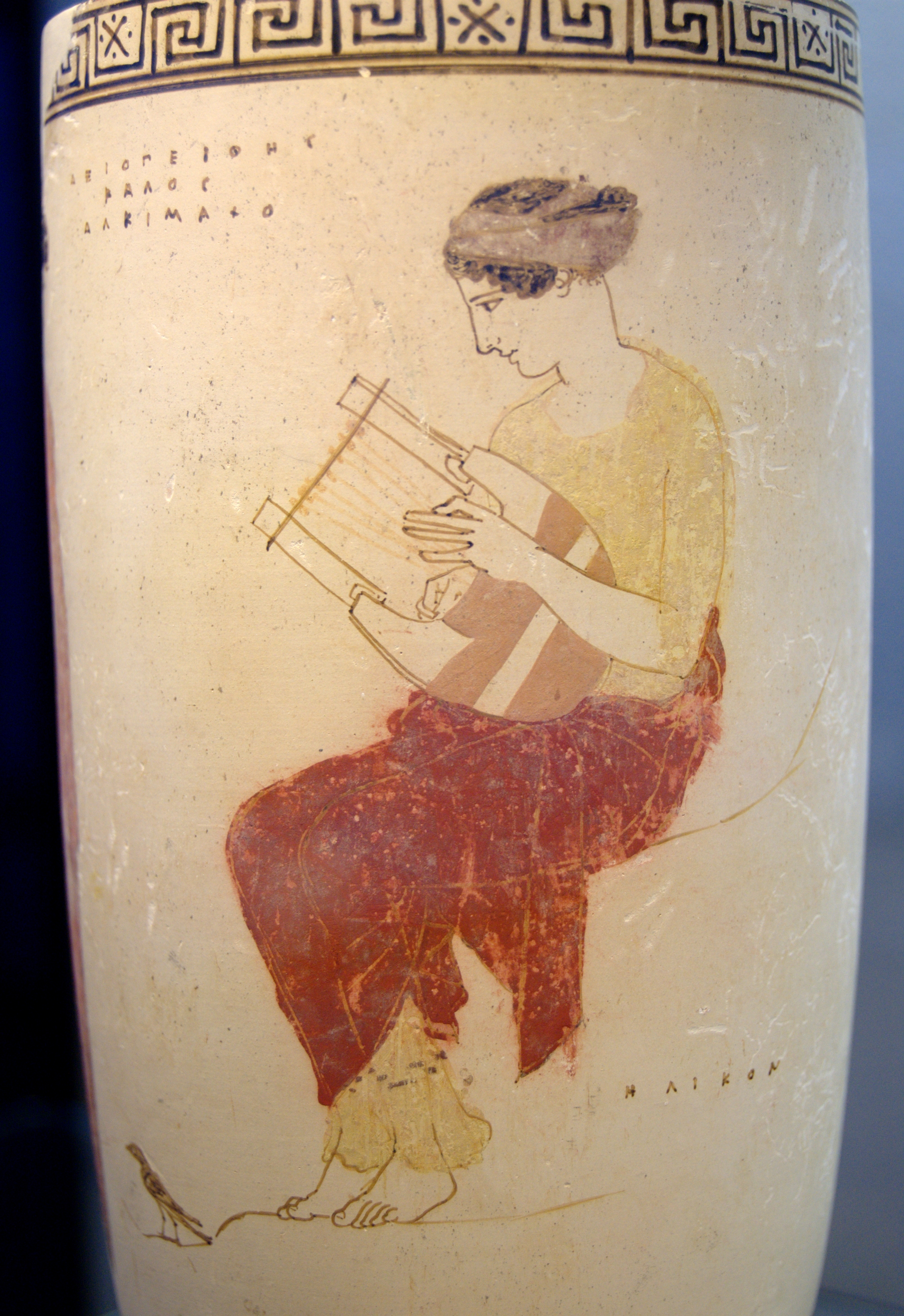 |
| Muse playing the Lyre (Courtesy Wikipedia) |
Then there is the whole bit about the fiddle. According to our lovely comic, and our favorite friend Wikipedia, the "fiddle" did not exist until at least the 9th Century CE. What is translated in the English as fiddle is more accurately the lyre. The lyre is an instrument that is similar to a fiddle or cello. I find it interesting that instruments similar to the lyre are found all over the world.
Another few things to remember. First, no one really knows who started the fire: Nero, the Christians, just some random people. Second, it was not uncommon in ancient Rome for fires to destroy various parts of the city. The fires were so destructive because of the close, and sometimes poorly built, insulae (apartment buildings) in Rome. Also, the Night Watch (aka fire department) did not have as much technology for fire-fighting. We have even seen this summer how fires spread quickly and destroy many structures and lots of land.
- Primary Sources
- Secondary Sources
- Images
